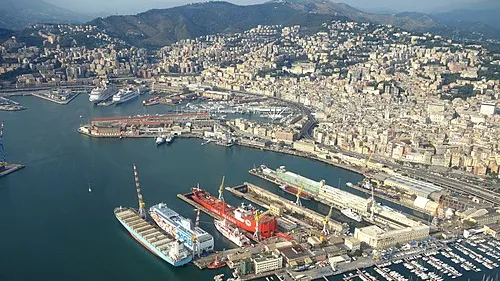
Genoa is the capital of the eponymous province and the Liguria region. The city stretches along the coast of the Ligurian Sea for 30 km. Few know that it is Genoa that is the birthplace of pesto sauce, the city of palaces, and the main port of the Mediterranean in the 16th century. Wealth from the New World literally flowed here. The history of Genoa is closely linked to navigation and trade. The local harbor is still one of the most important in Italy and one of the largest in Europe. Time has stopped here. Local shops have a history of over 100 years, following ancient traditions and recipes. The labyrinths of streets, “caruggi,” date back to the 12th century. It is the largest historical center in Europe that has remained untouched. Moreover, Genoa is a center of heavy industry and shipbuilding, and is part of the main industrial triangle of Italy, which also includes Milan and Turin. Today, Genoa is a city of universities and a scientific center.
On the tour, you will visit:
Palazzo San Giorgio – the first bank in the world from the 13th to 16th centuries;
Palazzo Ducale – the ducal palace, now a museum from the 13th to 16th centuries;
Central Piazza De Ferrari – with graceful and incredible fountains;
The Gothic Cathedral of San Lorenzo (12th-14th century) with the Chapel of St. John the Baptist, where the relics of the saint are kept. Visit the Treasury Museum, rich with relics such as the chalice of the Holy Grail (1st century), which Christ used on the day of the Last Supper (the Last Supper). The chalice on which the head of John the Baptist falls after its beheading by order of King Herod; a reliquary containing the hair of the Virgin Mary, the mother of Christ, and a thorn from Jesus’ crown of thorns; numerous Byzantine jewelry;
The Romanesque-style church of the Jesuit order of Saints Ambrogio and Andrew – 13th century with altars made by the hand of the most talented P. P. Rubens;
The gates of medieval Genoa – Porta Soprana from the 12th century, which are a symbol of the city;
The house – where, according to legend, the famous navigator – Christopher Columbus grew up;
The most beautiful street in Genoa – Garibaldi (formerly Via Aurea – Golden Street) laid out in the 14th century by the architect Galeazzo Alessi, a student of Michelangelo;
And finally – a walk through the narrow medieval streets with an enticing tale about the mores of life of the Genoese aristocracy of that period, the first bank in the world, the secrets of financial ingenuity and intellect, about insurance companies and notaries as chroniclers. About the first crusaders, who were indeed the Genoese.