






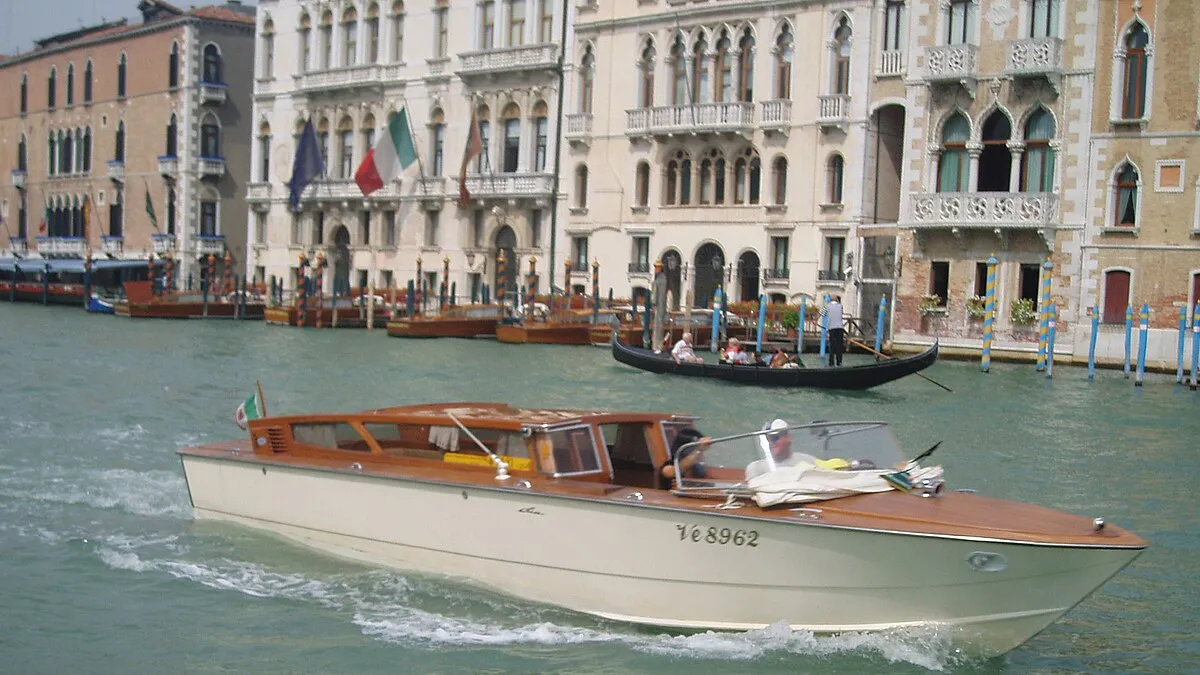
The tour is conducted on a Venetian water taxi
classic white plastic boat (maximum 8 people)
luxury wooden boat (maximum 8 people)
Main attractions:
Palaces and temples of the Grand Canal, the stories associated with them. The canals of Rio-Novo and Rio-Briati; Palazzo Ariani and the temple founded by the famous courtesan Veronica Franco. The Giudecca Canal – a canal about 4 kilometers long between the Dorsoduro district and the island of Giudecca. Its width ranges from 244 to 450 meters and depth up to 12 meters, so cruise ships enter the port via the Giudecca Canal; The Jesuit Temple – The Jesuit Church in Venice, located in the Cannaregio district. The official name upon consecration is Santa Maria Assunta; The Redeemer Temple – a church in the name of Christ the Redeemer in Venice on the island of Giudecca. It rises above the canal leading to the Piazzetta. Together with Santa Maria della Salute, it is one of the two votive churches in Venice, donated by the Signoria for the salvation of the city’s inhabitants from the plague epidemic. Squero di San Trovaso – one of the oldest and most famous Venetian squares. Squero (which means “courtyard” in the Venetian language: from the word “squara”, which refers to the tool used for boat construction) – is a classic shipyard where small boats such as gondolas, pupparini, sandoli, scioponi, and other vessels were built and repaired. The shipyard where gondolas are built. The Rio di San Lorenzo canal and the bridge near Leo Street. The Greek church – an Orthodox temple in the Castello district of Venice, the main temple of the Italian metropolis of the Constantinople Patriarchate. The church’s bell tower is tilted. Rio San Giovanni e Paolo Temple canal and the temple Rio San Giovanni e Paolo Temple – one of the largest and most famous cathedrals in Venice. The construction of the modern cathedral building was completed in 1430 and is dedicated to the Roman martyrs John and Paul, as well as the Colleoni monument – an equestrian statue of Bartolomeo Colleoni – a Renaissance sculpture in Campo Santi Giovanni e Paolo. It was created by Andrea del Verrocchio between 1480 and 1488 and depicts the condottiere Bartolomeo Colleoni (who served for a long time in the Venetian Republic). This is the second largest equestrian statue of the Italian Renaissance. Panorama of the Northern Lagoon. Return to San Marco.