









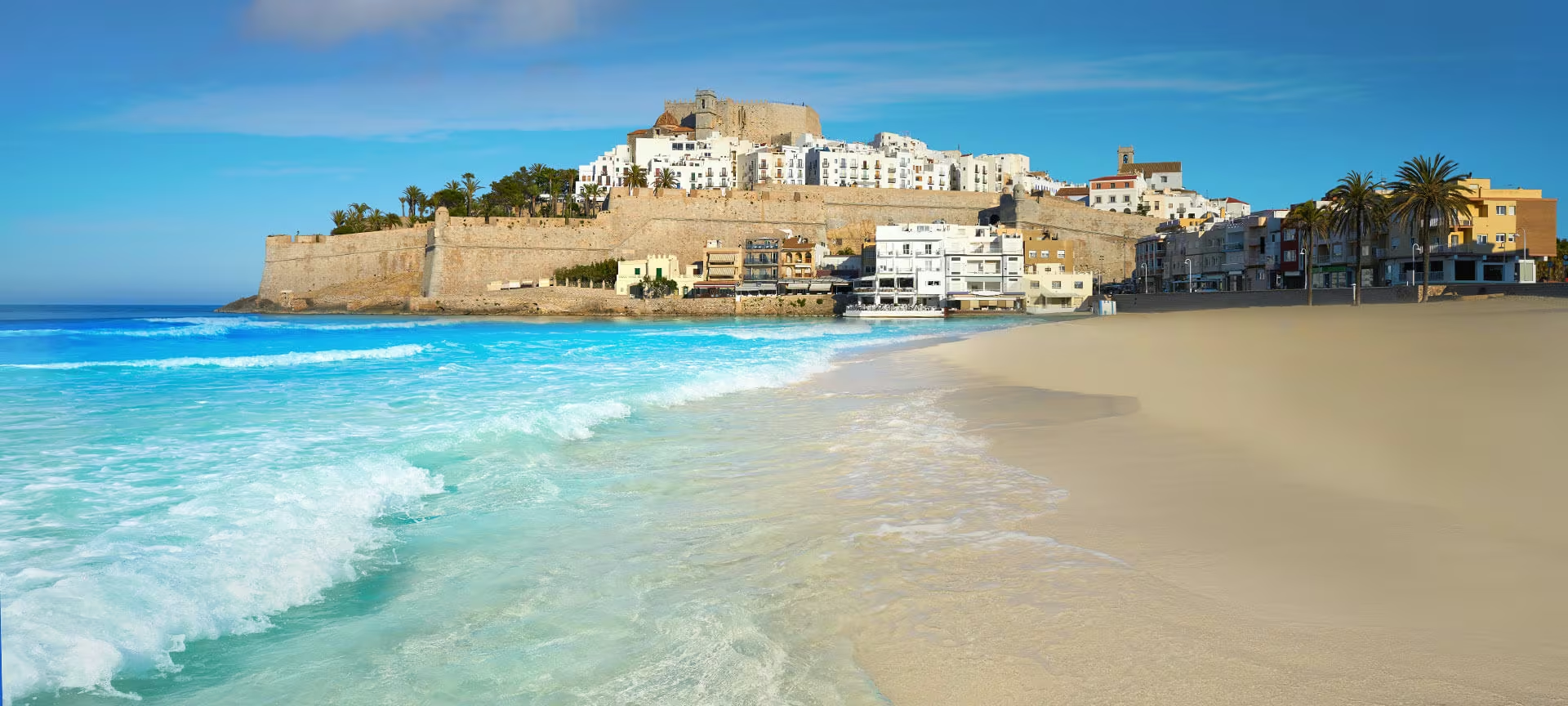

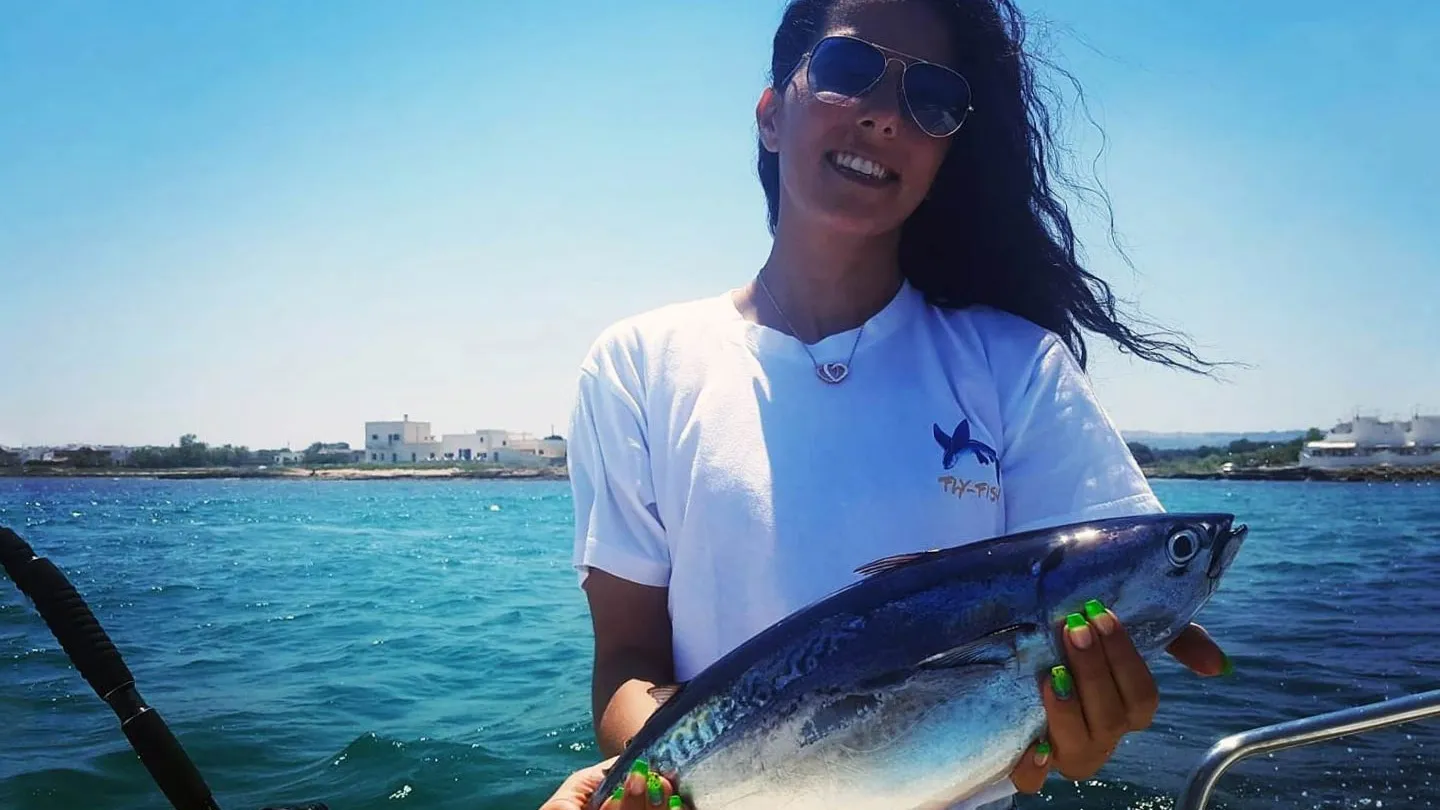
The Adriatic Sea can be compared to the Sea of Cortez in the California Gulf in Mexico. It is enclosed between the Italian peninsula and the former Yugoslavia. These 430 miles of the basin consist of two principal fishing territories: the Northern Adriatic from Venice to St. George’s port and the Central Adriatic from St. George’s port to the locality of Santa Maria di Leuca with its characteristic rocky coastline, where small beaches of white sand can also be found. Of particular interest to fishermen in the Adriatic is the giant bluefin tuna, although special enthusiasm is generated by catching blue sharks and thresher sharks, white tuna, mackerel, and sea bass. The bluefin tuna likely became the first species of “big game” encountered by the fishermen of this region. History suggests that the first encounters between tuna and humans occurred in the Mediterranean Sea. The bluefin tuna of northern Italy began its journey towards which people learned to profit from, long before the birth of Christ. Over 4000 years ago, the Phoenician tribes used the first rudimentary net traps in the Mediterranean Sea to catch this species. The tradition of making nets for catching this amazing species has been forgotten over the centuries. Today, only two experts of this ancient tradition, known as “tonnara,” remain. They still work in Sicily. Living legends and the last guardians of the ancient way of life at sea.
In 1970, the first bluefin tuna was caught on a spinning rod in the Po River delta in the Adriatic. Most of the giant bluefin tuna school remains in the waters of the northern Adriatic, in its shallow part, until early autumn, when it returns to the eastern Mediterranean, following the warm current towards the south that passes near the Italian peninsula. They return to the central part of the Adriatic in late autumn. The giant bluefin tuna fishing season in the northern Adriatic runs from June to November. The best months for fishing are July, August, and September.
At the beginning of the fishing season, tuna feeds in the open sea up to 30 miles from Chioggia, Albarella, Garibaldi port, Levante port, Rimini, and Pesaro. The entire northern Adriatic is characterized by shallow sea depth (maximum 90m) and a demarcation line that varies greatly between coastal waters and the open sea.
For this reason, fishing boats for sport fishing, which are small but fast, are equipped with seats for “fighting” at the bow of the boat. This way, the captain can pursue the giant tuna for an extended period during the fight.