






Angers. Since the 2nd century AD, it has been the capital of the tribe of the Andi. In 898, the ruler of Angers, Fulk the Red, founded the Anjou dynasty, independent from the French kings and playing a significant role in the history of Europe. In 1092, the French king Philip Augustus abducted the beautiful countess from the count of Anjou and married her.
Thus begins the feud between the house of Anjou and the French crown. In the struggle for power, the descendants of Fulk used not only victories in battles and political intrigues but also successful marriages. A striking example of this is the marriage of the count of Anjou and the daughter of English King Henry I, which in 1128 laid the foundation for the Plantagenet dynasty, future kings of England and, at the same time, rulers of Angers.
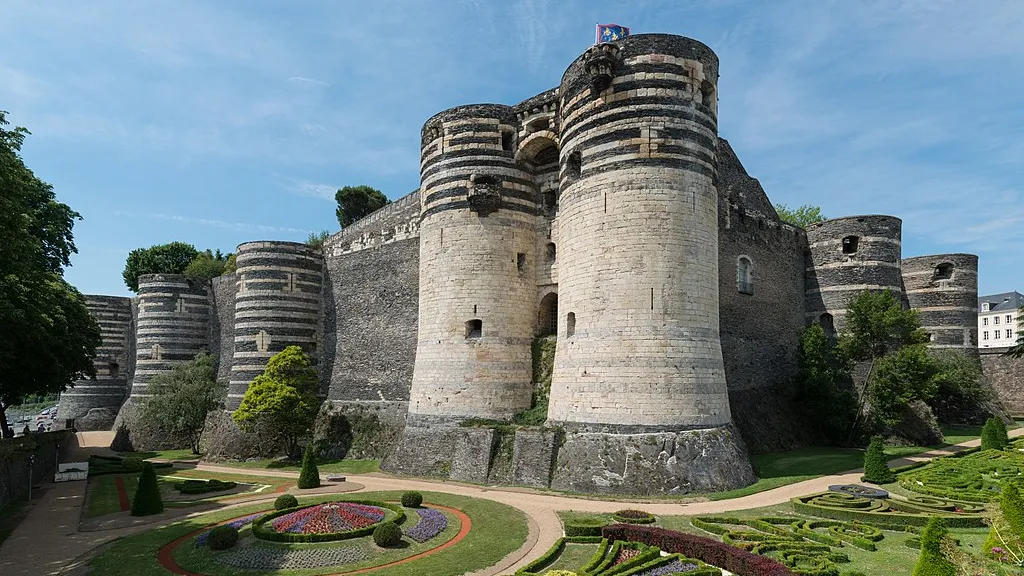
The castle is a rare example of well-preserved fortifications from the 13th century. It was built during Louis’s reign. It still impresses with its power and beauty. Inside the castle, several ancient buildings have been preserved, and in a specially built structure, a unique series of medieval tapestries on the theme of the Apocalypse, created on the occasion of the marriage of Louis II of Anjou and Yolande of Aragon in 1400. In the moat, there is a French garden.
The city itself is very nice with ancient streets, churches, monasteries, and museums.
Fontevraud. One of the most significant monastic complexes preserved in France. Here rests Richard the Lionheart, his father Henry Plantagenet, and his mother – Eleanor of Aquitaine, who left the French king, her first husband, for Henry…
Many queens and princesses ended their days here under the monastic veil. Half of the 36 abbesses of the monastery were of royal blood. Under Joanna of Bourbon, daughter of Henry IV, and Gabrielle de Rochechouart, sister of Madame de Montespan, the famous favorite of Louis XIV, the abbey reaches the peak of its flourishing… It is now hard for us to imagine the enormous number of people who formed the monastery, how many different workshops and specialists it had, and what a powerful mechanism regulated its activities! Moreover, monasteries in the Middle Ages did not just develop – they multiplied, founded new ones, thus forming their orders. Several hundred monasteries of the Fontevraud order were located in France, England, Spain… And all of them played a greater or lesser role in the politics of their respective countries…
Well preserved: the Renaissance cloister (fr. cloître – a covered walkway surrounding a closed rectangular courtyard or inner garden of the monastery) – the heart of the monastery, the monastery kitchen with a ‘diamond-cut’ roof, churches, including one from the 12th century, where the famous tombs of the English kings of the Plantagenet dynasty are located. Also – bedrooms, dining hall, guest rooms, male and hospital parts of the monastery…
Like most monasteries in France, after the revolution, Fontevraud was turned into a prison, and the last prisoners left it only at the end of the 19th century. Therefore, restoration work is constantly ongoing here. With each passing year, the monastic complex is reclaiming more and more details of its famous pre-revolutionary past. It amazes with its grandeur and timeless power of human passions, faith, and unquenchable striving for beauty.