






Marseille is the second largest city in France, one of the largest ports in Europe and the Mediterranean, connected to the mouth of the Rhône by a canal. It was founded by the Greeks in 600 BC and named Massalia. Since in the 3rd-2nd centuries BC it was often attacked by local tribes of Celts and Ligurians, the city formed an alliance with Rome in 123. From here began the Roman conquests of Provence and Gaul. During Caesar’s war with Pompey, Massalia was destroyed by Caesar’s troops.
In Marseille, whose history spans over 2500 years, not many monuments of antiquity have survived. The oldest of them are the ruins of an ancient Greek temple (4th century BC) and fragments of Roman fortifications.
After Caesar’s victory, Marseille was revived again only in the 10th century, thanks to the dukes of Provence. Then the growth of Marseille’s trade significance was aided by the Crusades, as the city became the most important transit port – the road to the east.
In 1481, along with Provence, Marseille became part of France. During the years of the Great French Revolution, it supported the republicans, and it is no coincidence that the anthem of France came to be called “La Marseillaise”…
During the Napoleonic Wars, the blockade by the allies once again undermined the economy of Marseille, which flourished once more with the opening of the Suez Canal, the development of industry, trade, colonial activities, and maritime transport of goods. This is the flourishing of the economy and cultural life of Marseille. Then, as the colonies were liberated and the flourishing of capitalism faced the first global crises, Marseille, once again, became poorer.
During World War II, Marseille became the largest center of resistance. Until the 60s-70s, the city was also a significant center of organized crime, which the French police eventually managed to handle.
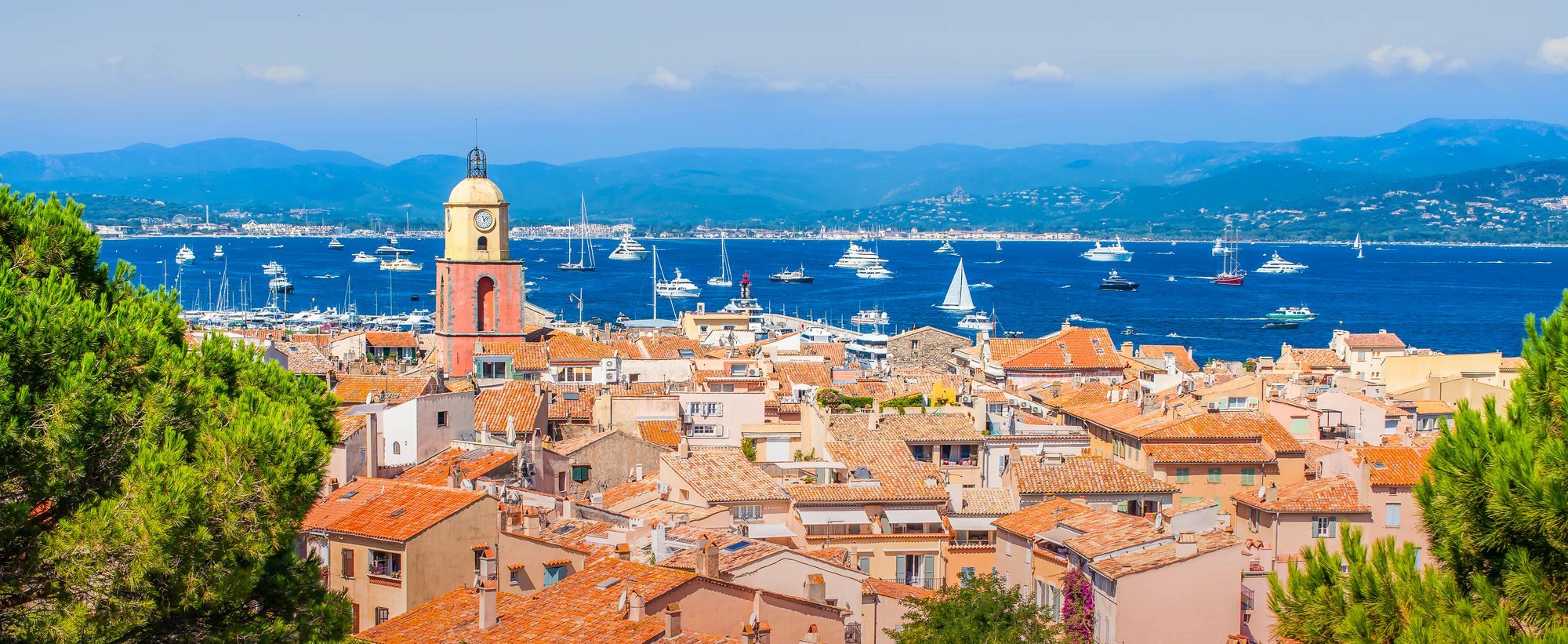
The Old Port (Vieux Port) occupies a key position in the city – a bay where the history of Marseille began and where today more than 3000 small yachts are moored. Here, a seafood market takes place daily: lobsters, crabs, sea urchins, oysters, almost all existing types of fish… From here, you can take a tour to the island of If, where not only the Count of Monte Cristo was imprisoned.
The entrance to the port is protected by two ancient forts – Fort Saint-Nicolas and Saint-Jean (le Fort Saint Nicolas et Saint Juan), built by the Knights Hospitaller in the 13th century and rebuilt in the 15th-17th centuries. Nearby – it seemed – another fortress. But this is the Church of Saint Victor (Saint-Victor), built in the form of a castle to protect the monastery that once stood here. The church contains the graves of the first Christian saints, chapels carved in stone during the early Christian era. Since the cathedral existed here long before the split of the church into Catholic and Orthodox, both directions feel at home here…
Old Marseille is located on the site of the ancient Greek city. Here you will find narrow, steep streets, small, almost village squares, delicious restaurants… The hospitable house and its chapel are extraordinary in their power and beauty – a masterpiece of the sculptor and architect – Puget. This is one of the most outstanding buildings in France. Old Marseille is surrounded by two ports – the Old and the new, ferry port, where huge white Mediterranean ferries and ships leave for Corsica, Sardinia, and Africa. At the foot of the old city rises a huge and powerful cathedral, made in the Neo-Byzantine style, – La Major (Cathédrale de la Major, 1852-1893). The enormous cross-domed basilica reigns, dominates over the city. It is a legacy of the era of Napoleon III, an era fascinated by gigantism…
Not far from the new ferry terminal lies Place de la Joliette, next to which is the town hall building (17th century), the Museum of Roman warehouses with amphorae for wine, grain, and oil, as well as the Museum of the History of Marseille with a well-preserved hull of a trading ship from the 3rd century.
The main axis and transport artery of the city is La Canebière (La Canebière – la chènevière) – here once were fields of hemp, from which ropes were made, hence the name. This is a wide boulevard stretching east from the Old Port and lined with beautiful buildings. Here were the famous Marseille cabarets, bars, theaters, and once the nightlife was bustling… Marseille has a very developed “club life”. It is no coincidence that in this port city during the times of buccaneers, the very Sir Francis Drake docked – the favorite pirate of Queen Elizabeth.
The main cathedral of the city is visible from afar. This is the Cathedral of Our Lady, Protectress of Marseille (Cathédrale Notre Dame de la Garde). The gilded sculpture of the Virgin Mary reigns over the city. The temple, made in the Neo-Byzantine style, dazzles with its mosaics, candles, gifts left in honor of the salvation of sailors, views of the sea, islands, Marseille… This is a mesmerizing place where the flickering of millions of candles beats the living heart of Marseille.
Marseille also has a fashionable, modern part, with avenues and villas, and suburban ports, with the best bouillabaisse in the world (bouillabaisse – an ancient fish soup that Voltaire loved so much), palaces, theaters, beaches, a famous stadium, museums…
Marseille is the most ethnically diverse city in France. Among the natives of the city are Marius Petipa (1822-1910) – a genius choreographer who staged all the famous classical ballets on the Russian stage. And footballer Zinedine Zidane, and Daniel – the hero of the film “Taxi”…
Marseille is 25 centuries of European history in the glow of the azure sea and architectural heritage!