






Sprawled along the banks of the Garonne River, near the Atlantic coast, Bordeaux is one of the largest ports in Europe, a major trading and cultural center, and the world capital of fine wines. This unique architectural monument is often referred to as “little Paris.” Victor Hugo said of it: “Bordeaux is an interesting, original, and perhaps unique city. Take Versailles, mix it with Antwerp, and you will get Bordeaux.”
Originating as a Celtic settlement after the Romans conquered Gaul, Bordeaux became the capital of Aquitaine. It was the Romans who first planted the vine on this land, determining the history of Bordeaux and its future. During the English rule (1154 – 1453), the city began to flourish, thanks to the export of wine to England.
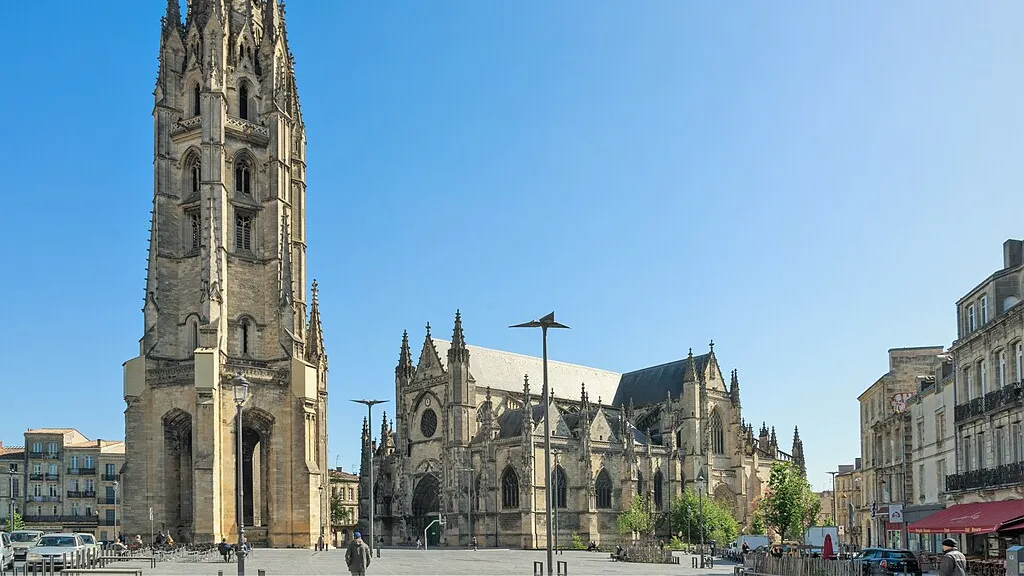
Historical events have left indelible marks on the entire architectural appearance of Bordeaux. The Palais Gallien and the ruins of the Roman amphitheater reflect the Gallo-Roman era. The medieval period is represented by many well-preserved churches, the most famous of which are Saint-Seurin and Sainte Croix. The Gothic influence is particularly noticeable in the appearance of the churches of Sainte Eulalie and Saint-Michel. However, the predominant architectural style in Bordeaux is the neoclassical style of the 18th century, with wide streets, parks, and squares, the largest of which – the Esplanade des Quinconces – occupies almost 12 hectares. The pearl and main attraction of the city is considered to be the Grand Theatre located at Place de Comedie. It is known that the beauty and perfection of this building served as a model for architect Garnier when designing the Paris Opera House.
In general, Bordeaux resembles an exquisite decoration. Its proportions are so well-balanced, the details are thoughtfully designed, and the balcony railings and curves of the decorations on the houses are refined. The medieval period here is framed by aesthetically refined 18th-century architecture, bathed in the Aquitaine sun and permeated by the wide fairway of the Garonne. The city is mostly pedestrian. Here you will find extraordinary fountains, one of which you can stroll by and admire the reflections of architecture and rainbows above them, some of the most beautiful trams in France, exquisite restaurants, and shops….
Art lovers should visit the Museum of Fine Arts (Musee des Beaux-Arts), which houses works of art from the 18th-19th centuries, including works by Titian, Rubens, Delacroix, Corot, and others.
While walking through the historic center of the Saint Peter’s district, you can also visit the Palais Rohan, the Archaeological Museum, the Museum of Decorative Arts, and the Museum of the History of Aquitaine.
The market at Place des Grands Hommes resembles a huge gastronomic counter worthy of Gargantua. Here you will find any products that meet the most exquisite tastes of any gourmet. These are the famous French truffles, a huge selection of cheeses, goose liver pâté, and other local delicacies that can be delightfully washed down with wine from local cellars of such brands as Médoc, Blaye, Bourg, Pomerol, and Saint-Émilion. These names are familiar to all lovers of Bordeaux wines. In the center of Bordeaux is the Maison du Vin, where you can familiarize yourself with the wine route map and also take a short course in “oenology” – the science of winemaking.