











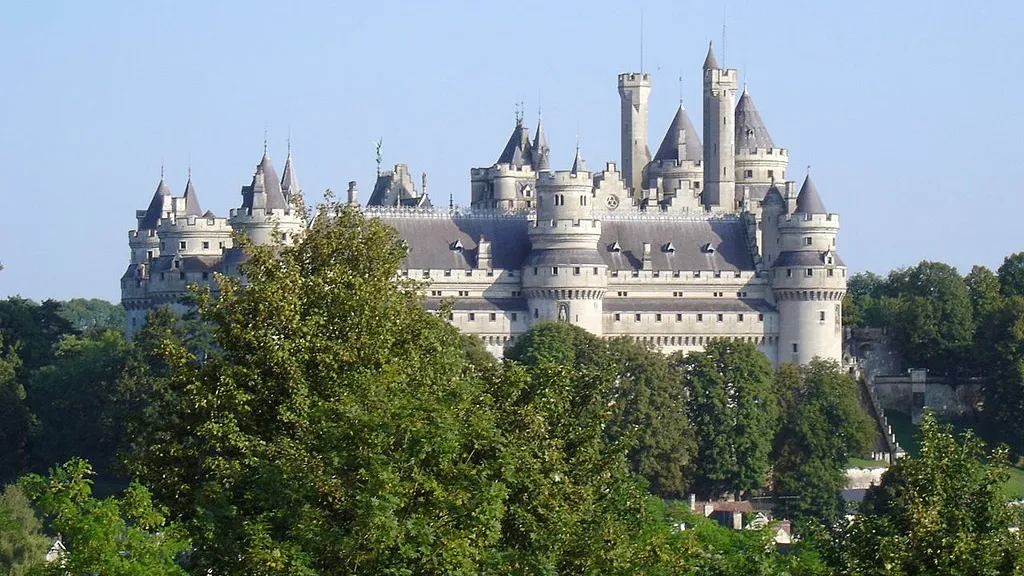
In the midst of the vast Compiègne forest on top of a hill, as if in a fairy tale, the majestic bulk of the medieval castle of Pierrefonds (Chateau de Pierrefonds) comes into view.
Built in the 14th century by the powerful brother of the French king, Duke Louis of Orléans (Louis d’Orléans), this castle has gone through many twists of history, including its destruction in the 17th century by the troops of Cardinal Richelieu (Armand-Jean du Plessis, duc de Richelieu).
In the second half of the 19th century, Napoleon III took notice of it. Having established a luxurious autumn residence nearby at the castle of Compiègne (Compiégne), the emperor commissioned the famous architect – the “reviver” of the Middle Ages, Viollet-le-Duc (Eugène Emmanuel Viollet-le-Duc) – to restore the castle. The master restored the curtains (the part of the fortress wall or the wall between the bastions), the drawbridge, the watch path on the roof, the embrasures, and the machicolations (machicoulis – overhanging loopholes located in the upper parts of walls and towers), and inside created a unique hall of “women-warriors,” where the nine depicted goddesses were given portrait features of Empress Eugénie, the wife of Napoleon III, and ladies from her entourage. Already at the end of her long life, having come from England, where she was in exile, Eugénie de Montijo (Eugénie de Montijo), the former empress, visited once again her beloved Compiègne and Pierrefonds and was very moved to see herself in her prime in this hall…
Probably, this is the most impressive in size, preservation, and power of all the castles in France. The beauty of the inner courtyard, sculptures, harmony of proportions, grandeur of interiors, views from the castle – all of this captivates and delights the traveler.