







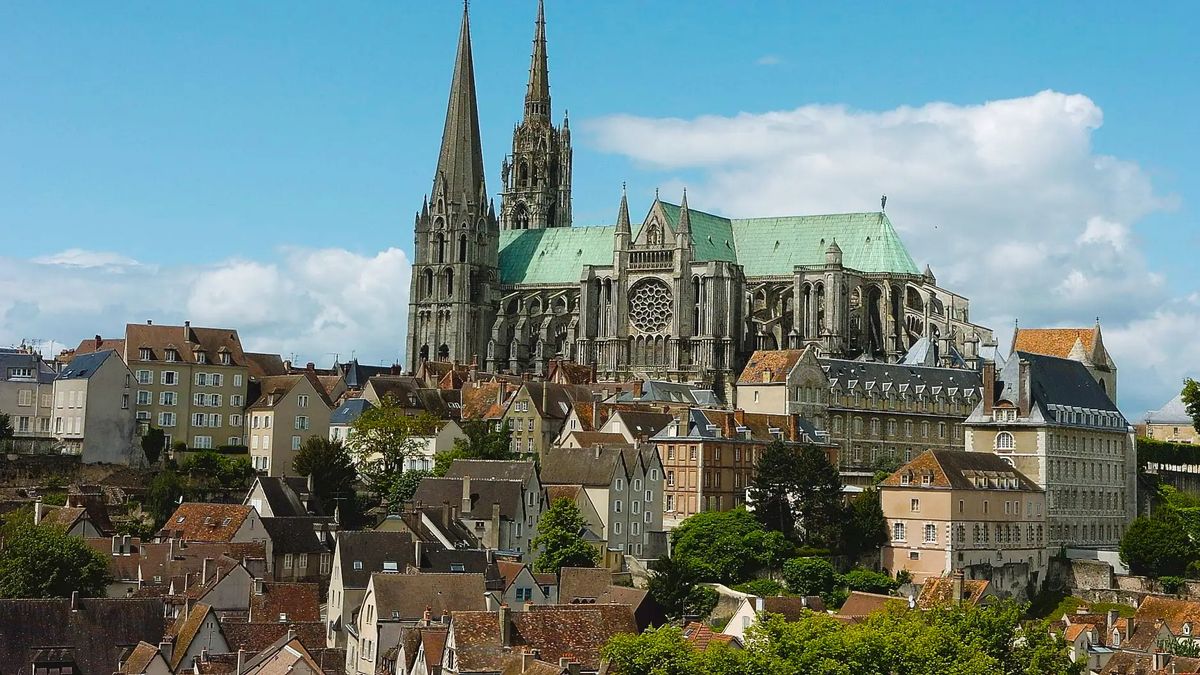
Chartres – a charming medieval town located 90 km from Paris, situated at the crossroads of roads leading to Normandy, Brittany, and the Loire Valley castles.
“Modern” history of this city dates back to the mid-1st millennium, when the construction of the first Catholic church began in Chartres. In the 9th century, a fourth temple stood in its place, to which French King Charles II the Bald, from the Carolingian dynasty, granted the Veil of the Blessed Virgin Mary. Tradition holds that this very garment was worn by the Virgin Mary at the moment of Christ’s birth.
In 911, Normans appeared under the walls of Chartres. Then the first miracle associated with the Veil occurred; it was hung on the city wall by Bishop Jantelme, and the Normans fled in terror. The second miracle in Chartres happened in 1194 when the Chartres Cathedral was almost destroyed by fire. But the reliquary that housed the Veil of the Virgin Mary survived! It was hastily moved to an underground secret chapel. Almost immediately after the fire, in 1194, the construction of a new cathedral dedicated to the Virgin Mary began in Chartres, which was named Notre-Dame de Chartres.
The temple was built over one and a half centuries and was consecrated in 1260 in the presence of King Louis IX. This is the first cathedral in the history of France dedicated to the Virgin Mary. It has remained virtually untouched to this day. Located on a high hill above the city, the Chartres Cathedral is known as the “Acropolis of France.” It is compared to an encyclopedia that reflects the worldview of various layers of French society in the first half of the 13th century.
Kings and princes came here to venerate the famous relic, and Henry IV chose this cathedral for his coronation.
The cathedral is also famous for its unique stained glass windows from the 12th-13th centuries. The oldest of them have that unique deep blue color, which is called “bleu de Chartres.” In the 18th century, an extraordinarily expressive series of bas-reliefs on biblical themes appeared in the cathedral, located around the altar area. In the middle of the temple is the famous labyrinth – one of those for which medieval churches were renowned, and through which, on their knees, penitents and pilgrims moved… Beneath the cathedral, two ancient crypts have been preserved – underground churches, one of which dates back to the 9th century, while the other is the largest in France…
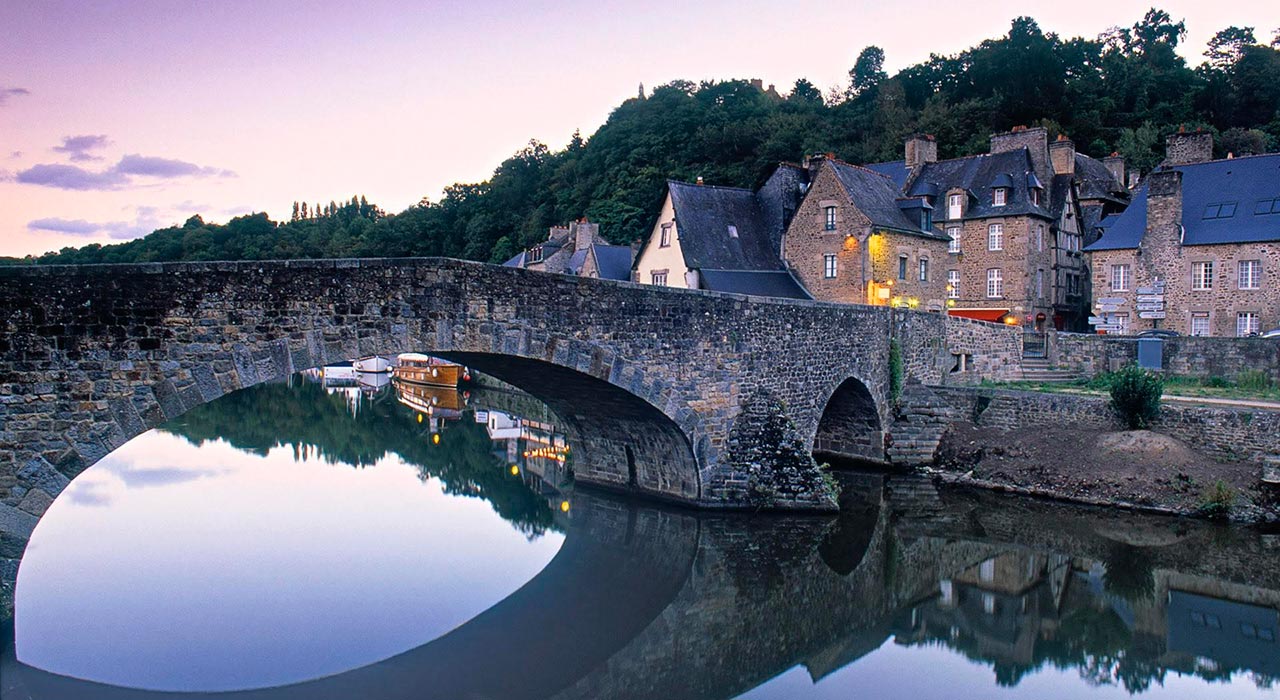
The old town, stretching from the cathedral to the banks of the Eure River, is rich in 16th-century houses adorned with wooden sculptures. Strolling through the narrow picturesque streets of Chartres, one can visit one of the many confectioneries and taste the pale green meringue candies filled with delicate chocolate and praline “Menshikov,” which were first made by the confectioner Domenil in 1893 in honor of the Franco-Russian alliance.