






Excursion to the Archaeological Park of Barumini – “Mysteries of the Nuragic Civilization.”
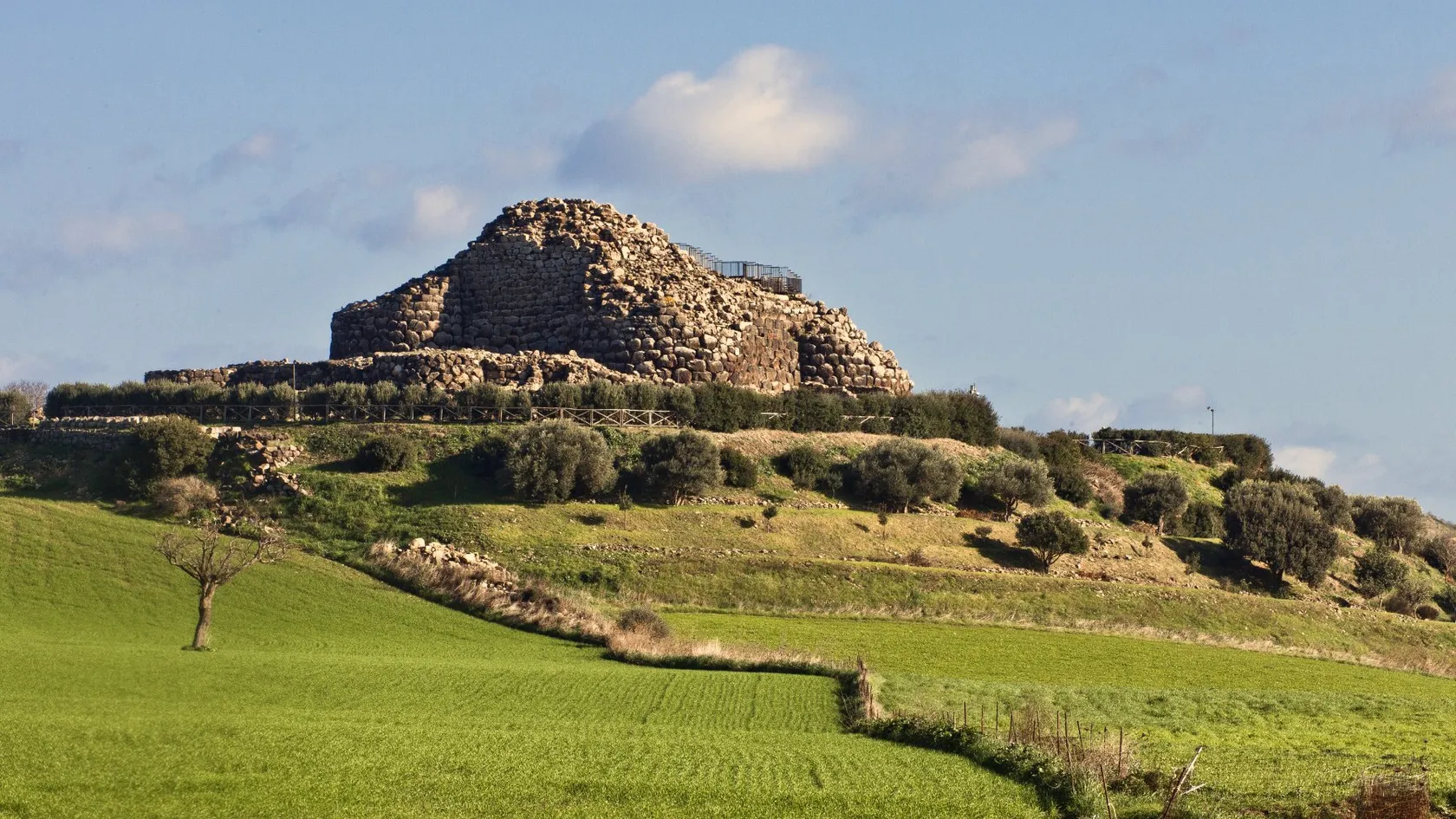
Su Nuraxi di Barumini is an archaeological monument of the prehistoric era, located on the island of Sardinia near the town of Barumini. It is a well-preserved complex of megalithic towers dating back to the 15th century BC. In 1997, the unique site of Su Nuraxi, the most prominent attraction in Sardinia, was included in the UNESCO World Heritage List.
The appearance of nuraghi in Sardinia, translated from the Campidanese dialect of the Sardinian language as “nuragi” – this is what prehistoric stone structures in the shape of towers are called, which were widespread in Sardinia from the 2nd millennium BC to the 13th century BC. Su Nuraxi is not the only preserved architectural monument. Currently, there are about 800 nuraghi on the island with varying degrees of preservation, while in the past their number reached 20-30 thousand. Around these towers, stone walls were built and settlements emerged, which are commonly referred to as nuragic villages. Debates about the people who brought the culture of nurag construction and had their own unique language continue to this day. Most likely, they were migrants from the Eastern Mediterranean, possessing a higher level of development. One of the most interesting discoveries is the presence of the mysterious Etruscans during the period of nurag construction, for whom Sardinia became a stopover point for migration from Asia Minor to Italy. Nuraghi were used until the Roman invasion in the 2nd century BC, or possibly later – in the 3rd century AD.
Su Nuraxi di Barumini is the most vivid and complete example of nuragic architecture in Sardinia.
Notable is the huge well in the center of the inner courtyard of the complex (it still contains water). It reaches a depth of 15 m and replicates the shape of the nuraghe, widening at the bottom to 4 m in diameter and narrowing at the top.
Interestingly, the excavations of the nuragic village did not uncover any traces of property inequality.
It is known that there was a cult of the goddess of fertility, characteristic of all Mediterranean peoples, who revered the earth, water, and celestial bodies.
One of the most intriguing archaeological mysteries is the so-called Giants’ Graves. Giants’ Graves (1500 BC) refer to huge stone blocks that are positioned vertically in the ground. They are located a few kilometers from an area called Arzachena. In total, about 700 such monuments have been discovered.
The study of Su Nuraxi di Barumini allows us to conclude that the stone complex was an important economic and political center until the 1st century BC, and its architecture was comparable in complexity to the structures of Ancient Greece. The found items – tools, weapons, ceramics, bronze figurines, and jewelry – open a door to unraveling the history of Sardinia and the ancient nuraghi, which still have much to surprise the modern world.