






Mantua. The Splendor of the Gonzaga Court
In prehistoric times, the territory of the province of Mantua was inhabited by Etruscan and Gallic tribes. After 220 BC, the settlement became part of the Roman Empire. The city was built in the Middle Ages as an impregnable fortress, having a quadrangular shape with towers at the corners, surrounded by river waters, lakes, and swamps. From the 11th century, the lands belonged to Boniface III of Tuscany. In 1167, the city acquired the status of a republic and joined the alliance of free cities of Lombardy. From 1269 to 1328, the Bonacolsi family seized power in Mantua. It was during this period that many buildings, which are now the adornments of the city, were constructed.
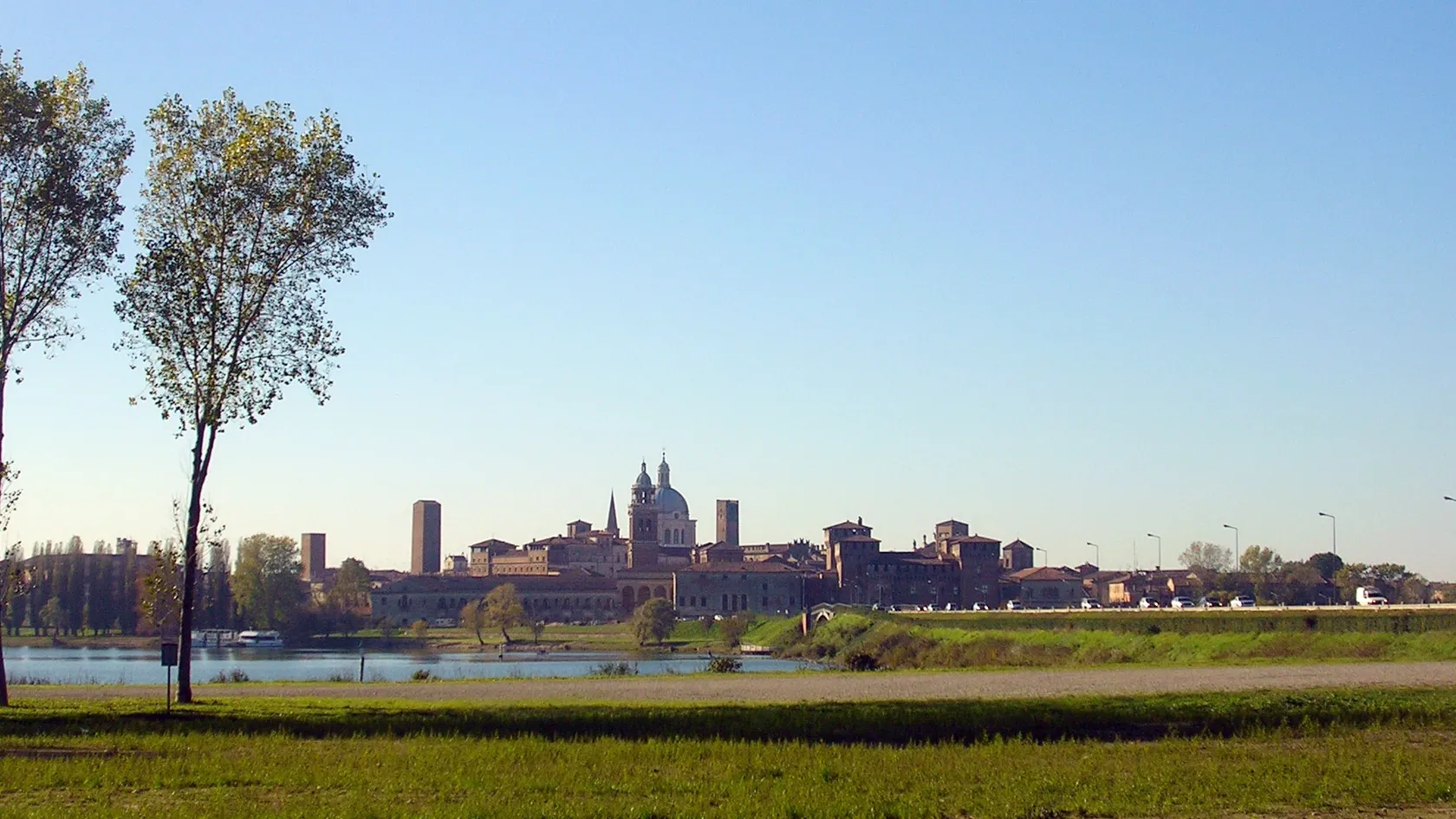
From 1328, the city was ruled by representatives of the Gonzaga family, who were famous art connoisseurs and patrons. Sleeping Beauty Mantua amidst the thick fog of the Po Valley. Once one of the most luxurious courts in Europe.
The heart of the city is the Castle of Saint George, the residence of the lords of Gonzaga. About 100 halls, inner courtyards, gardens, and churches. Works by the best artists of the Renaissance and one of the most famous halls of the castle – Camera degli Sposi (the room of newlyweds) – by the great Andrea Mantegna.
Far from all has remained of the former grandeur of the Gonzaga family. The famous collections of paintings will be sold off, the library and luxurious furniture plundered, but the palace, which hosted Rubens, Pisanello, Titian, Romanino, and Leonardo da Vinci, has still preserved the atmosphere of one of the main centers of the Italian Renaissance.
Another masterpiece that cannot be missed is the Te Palace. A country villa built for the duke’s secret pleasures. The country villa of the Mantuan Marquis Federico II Gonzaga in the marshy area surrounding Mantua. Built in 18 months in 1524–1525 according to the design of Giulio Romano. Then, for 10 years, it was decorated by Romano himself and his students. It represents a vivid example of Mannerist art. The official name of the building is Palazzo Te, which is also how it is most often referred to in Italy. However, this name was given to the palace relatively recently. Vasari calls it Palazzo del T (pronounced as “Te”), while English-speaking authors use the form Palazzo del Te.
Mantua is also a city of strong women. Matilda of Canossa and the “Queens of the Renaissance” — Beatrice d’Este.
The traces of the Holy Grail also lead to this city, namely to the Basilica of Saint Andrew.
You can also specify the attractions you would like to visit.