Montenapoleone Street is not just shopping
Montenapoleone Street is known worldwide as the kingdom of High Fashion. But behind the facades with luxurious windows lies one of the most interesting historical districts of Milan.
During the Roman Empire, the fortifications of the ancient city passed through here. In the basements of the houses on the odd side of the street, their traces are still preserved.
In the 18th-19th centuries, this was the aristocratic district of Milan, just a stone’s throw from La Scala Theatre.
Behind the strict facades of the houses hide charming courtyards that you must visit.
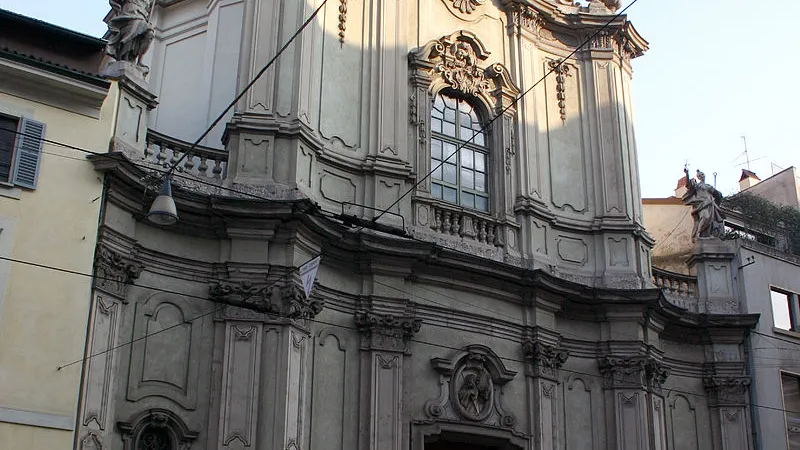
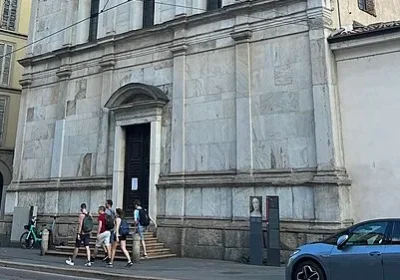
The Church of San Francesco di Paola is a rare example in Milan of a unified ensemble in the Rococo style (1728). The whimsy of the curved-convex walls and the richness of the decorative furnishings make the church resemble a precious little box.
The Poldi Pezzoli Museum, created from a private collection, is one of the largest in Europe. Here, among many other masterpieces of painting, you can see Botticelli’s canvas “The Lamentation of Christ.” There are also large collections of jewelry, watches, Murano glass, porcelain, and weapons.
Unique and unusual is the house-museum of the Bagatti Valsecchi family. The eccentric owners decided to turn their mansion into a complete replica of a Renaissance palace. All items (actually used) are originals from the 15th-16th centuries.
Grand Hotel et de Milan is the most historically rich hotel in the city. Giuseppe Verdi lived here for 20 years and died here. The first musical record in history was recorded here by the great Caruso. Many celebrities have passed through these luxurious halls (some of which you will see). The two restaurants (each with its own terrace) and the hotel bar are among the most famous and prestigious in Milan.
Another symbol of Milan is the pastry cafe “Caffè Cova,” founded in 1817. Here they make the best panettone in the city – the sweet symbol of Milanese cuisine.