Grand Berlin. The Third Reich and Memory

Loading available options...
  • Duration:5 days 4 nights
  • Tour Type:Auto tour, Cultural and thematic tours, Historical, Walking tour
The program and duration can be adapted according to clients' wishes.

Price upon request.

Highlights

  • the historical center of Berlin
  • 20th-century routes
  • spaces of memory
  • Sachsenhausen
  • Jewish Berlin
  • optional outbound routes

Itinerary

Expand all

Day 1. Berlin and the First Historical Context

Day's program:

  • arrival in Berlin
  • individual transfer to the hotel
  • panoramic city tour
  • historical center and government district
  • walk along the Spree (optional)

Description:

The day begins with arrival in Berlin and an individual transfer to the hotel.

After a short break, the program moves on to a panoramic tour that helps to see the city as a blend of imperial, modernist, and contemporary architecture.

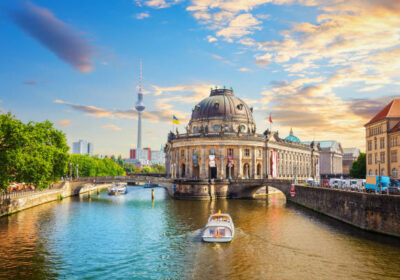
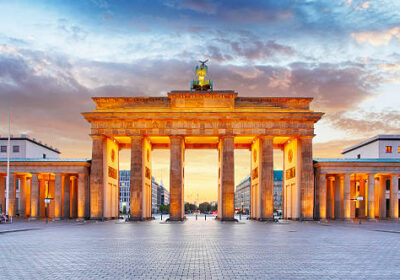
The route includes the historical center, Unter den Linden, Museum Island, Gendarmenmarkt, Brandenburg Gate, and the government district.

If desired, the day can be complemented with a walk along the Spree (optional) to view Berlin from the water and gently conclude the first acquaintance with the city.

Day 2. Military Berlin or Jewish Berlin

Day's program:

  • a car and pedestrian route through the sites of the 20th century
  • Topography of Terror and Wilhelmstrasse
  • architecture of the period and Bendlerblock
  • Reichstag and memorials
  • alternative route through Jewish Berlin (optional)

Description:

The main option for the day is dedicated to places related to the history of the Nazi regime, resistance, and the end of the war in Berlin.

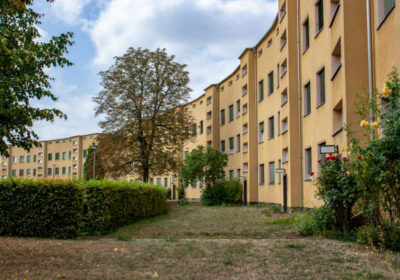
The route passes through the Topography of Terror, Wilhelmstrasse, and preserved administrative buildings from the period, which allow the city to be read as a historical document.

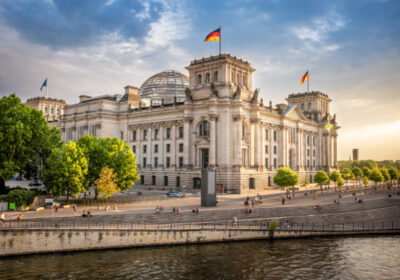
A special emphasis is placed on the Bendlerblock, the Reichstag, and memorials to Soviet soldiers, where the political and military context of the era is particularly evident.

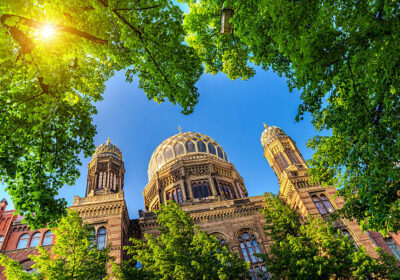
Alternatively, the day can be structured around Jewish Berlin — with the New Synagogue, memorial addresses, and Holocaust memorial spaces (optional).

Day 3. Sachsenhausen

Day's program:

  • departure to the Sachsenhausen memorial complex
  • route through the territory of the former camp
  • history of the camp system and control architecture
  • return to Berlin

Description:

This day is dedicated to a trip to Sachsenhausen — one of the key memorial complexes related to the history of the Nazi Germany camp system.

The tour of the territory is structured as a sequential route through the main points of the complex, where not only the facts are important, but also the organization of the space itself.

The excursion helps to understand how the system of management, control, and suppression operated at the level of architecture, logistics, and daily routine.

After the visit, a return to Berlin is planned, followed by a calm conclusion to the day.

Day 4. Free Berlin and additional routes

Day's program:

  • Free time in the city
  • shopping or individual museums (optional)
  • additional thematic excursions (optional)

Description:

The day remains free and allows for a program to be structured at an individual pace.

It can be dedicated to shopping, walks through the central districts, or museums depending on interest in art, architecture, and the history of the city.

If necessary, the day can be supplemented with a private thematic excursion (optional) to maintain the overall character of the route and expand the program without overload.

Day 5. Conclusion of the Itinerary

Day's program:

  • free time
  • transfer to the airport
  • flight home

Description:

The final day proceeds at a calm pace and without additional excursion load.

Free time can be used for a short walk or personal plans before departure.

Then, a transfer to the airport and flight home is organized.

Optional excursions (optional)

1. Berlin lifestyle

The route passes through the courtyards of the Spandauer suburb, local galleries, design spaces, and small theater venues. This is a calm urban route for those who want to see Berlin beyond classic postcards and feel its modern cultural rhythm.

2. A country that no longer exists: GDR

The excursion covers key spaces of East Berlin: East Side Gallery, Karl-Marx-Allee, Alexanderplatz, former state security structures, and closed government zones. The route helps to understand how the ideology and everyday life of the GDR manifested in architecture, urban planning, and collective memory.

3. Trip to Leipzig

The route leads to one of the main cultural centers of Saxony with a strong musical and university tradition. The focus is on the historic center, St. Thomas Church, St. Nicholas Church, the old town hall, and the commercial spaces that shaped the image of the city.

4. Trip to Magdeburg

This excursion is dedicated to the early imperial history of Germany and the urban heritage of Magdeburg. The program includes the cathedral, the old market, traces of medieval legal culture, and architecture that connects different historical eras.

5. Trip to Erfurt

Erfurt reveals itself through the medieval fabric of the city, the university's history, and the trading past of Thuringia. The route includes the cathedral square, St. Augustine's Monastery, the old synagogue, the Fish Market, and districts associated with the trade of wool.

6. Trip to Quedlinburg

Quedlinburg is one of the most intact half-timbered towns in Germany and a rare example of preserved medieval scale. The program revolves around the market square, the collegiate church of St. Servatius, old quarters, and the landscapes of the Harz.

7. Trip to Weimar

The trip to Weimar allows a shift in focus towards German classicism, intellectual history, and UNESCO cultural heritage. The highlights include urban spaces associated with Goethe, Schiller, Herder, and the court of Anna Amalia.

See more excursions

You might also like...