






Paris of the Second Empire. Ladies in ball gowns with dizzying décolletés and huge crinolines, gentlemen in black tailcoats and tall top hats, shining courtesans. The music of Verdi and the novellas of Maupassant,
World exhibitions, the Salon of the Outcasts, “Olympia” by Manet, the beginning of Impressionism, Sarah Bernhardt. The city center, transformed into a giant construction site – the Grand Opera of Charles Garnier, two new theaters in the old Place Châtelet, the grand boulevards of Baron Haussmann. Luxurious mansions on the boulevards with wide halls, marble staircases, attics, stucco, fireplaces, parquet floors, and lace-like (“French”) balconies. Mansions where prosperous financiers (the Rothschilds, the Perreres…) and famous courtesans of the time held magnificent celebrations.
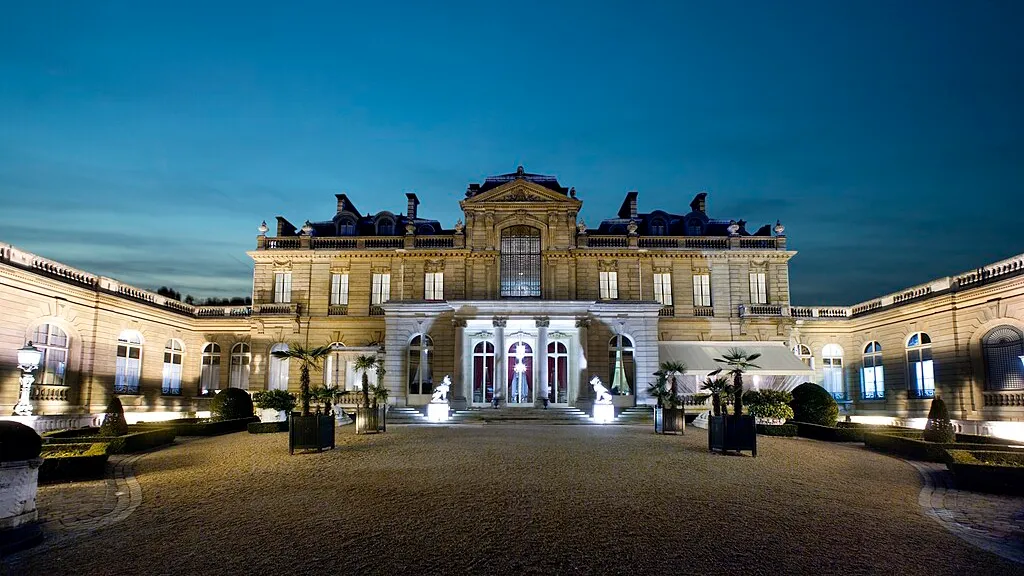
One of these mansions in the center of the new – “Haussmannian” – Paris, located between Monceau Park and the Grand Opera, belonged to Madame and Monsieur Jacques-Marand. In their house with a wide inner courtyard, a winter garden, a living room with windows overlooking the boulevard, a smoking room in Turkish style, and an original, almost “weightless” staircase by architect Henri Parra, the most exquisite high society gathered. Having no children, Nelly Jacques and Édouard André devoted all their time and energy to collecting works of art. Their passion was Italy. Consulting with specialists from the Louvre, they assembled in their mansion the richest collection of Italian art of the 15th century (the second most significant in France after the Louvre), as well as works by masters of French art of the 18th century and Dutch artists of the “Golden Age.”
Before her death, Nelly Jacques, driven by the idea of preserving her collection, bequeathed both the mansion itself and the collection to the Institute of France, which opened a museum here. Visiting it, you will immerse yourself in the world of the Second Empire and enjoy masterpieces of world art. You can end the tour with a “sweet pause” in the exquisite tea salon of the museum with Tiepolo frescoes or lunch at the newly opened restaurant “Païva” (La Païva) on the Champs-Élysées, located in the mansion where the famous Russian courtesan of the time hosted “all of Paris.”