
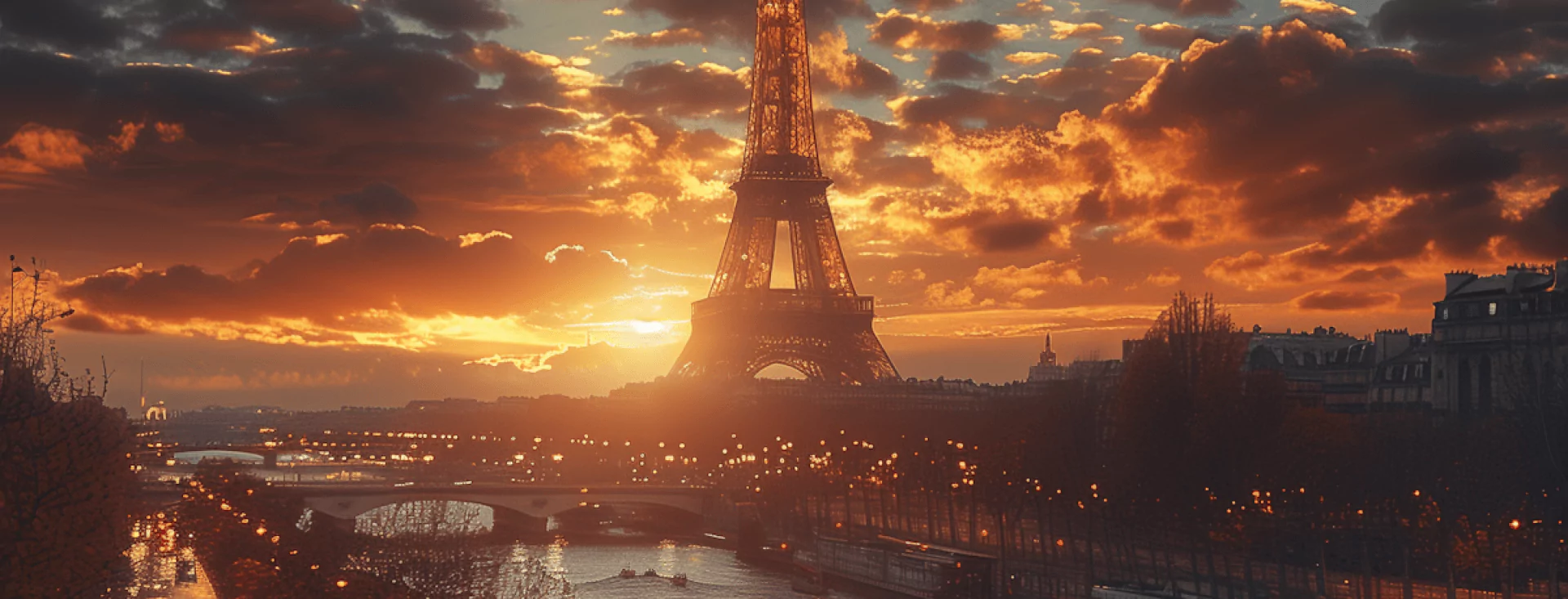







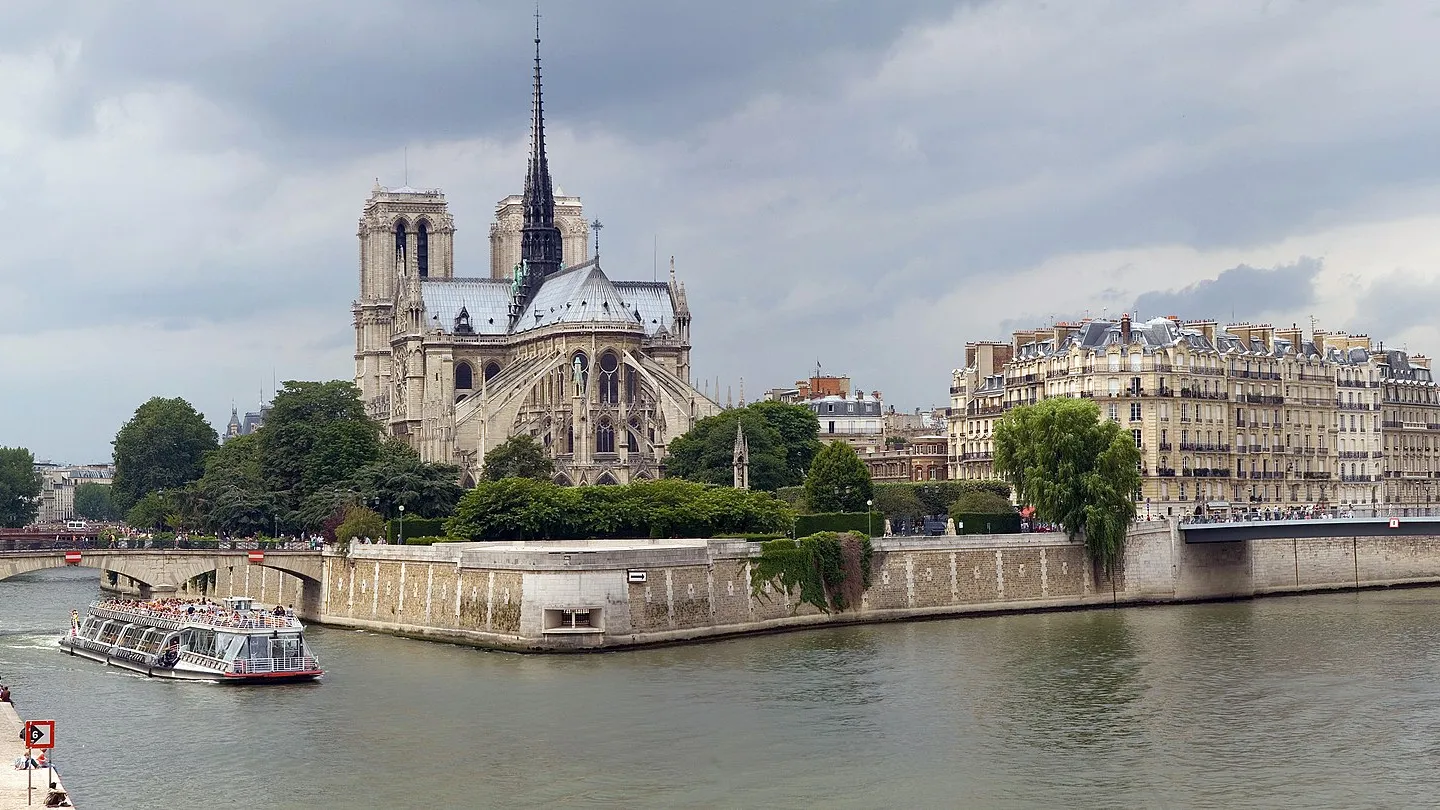
Île de la Cité – the heart of Paris and France. Here, the French state was born and formed. In the 3rd century BC, Celtic tribes known as ‘Parisii’ settled here. In the 1st century BC, Île de la Cité was the center of the Gallic-Roman province with a Roman fortress, a church, houses, baths, a market…
On the site of the first Roman churches today stands the Cathedral of Notre-Dame de Paris with its unique relics, history, bas-reliefs, sculptures, stained glass, chapels… Behind it is the courtyard of the canon’s monastery, from which the Sorbonne was born.
The Conciergerie – a royal castle built in the early 14th century and later became a prison (here, in particular, Marie Antoinette awaited her execution)… On its Clock Tower are the oldest clocks in Paris. Sainte Chapelle – a palace church built in the 13th century to house the crown of thorns of Jesus Christ. From the Conciergerie, there is a view of Place du Châtelet, in the middle of which stands a column dedicated to Napoleon’s victories. On opposite sides of the square are two theaters, where Diaghilev’s ballets with Vaslav Nijinsky and Anna Pavlova once took place.
Place Dauphine – the first royal square of Paris.
The Latin Quarter – here once thrived the Gallic-Roman province of Lutetia. Now it is a student and restaurant district with inexpensive shops and unforgettable streets where the Duke of Buckingham, Athos, Napoleon, Akhmatova, and others lived. The majestic remains of Roman baths built in the 3rd century AD and destroyed by barbarians in the same century have been preserved…
Boulevards Saint-Michel and Saint-Germain (both 19th century, during the era of Baron Haussmann) and Rue Saint-Jacques, laid out by the Romans in the 1st century AD. Churches – Saint-Séverin (13th century) and Saint-Julien-le-Pauvre (13th century).
On every corner – restaurants. Including the oldest and first restaurant in Paris, opened in 1686. Next to it is the house of Dr. Guillotin. The 15th-century castle – Cluny, Sorbonne – a university founded in the 13th century (in its church – the tomb of Richelieu), the Pantheon, where Voltaire, Jean-Jacques Rousseau, Victor Hugo, Émile Zola rest…
From the monastery of St. Genevieve, the graves of the first king of France Clovis and his wife Clotilde (6th century) have been preserved, as well as the 13th-century refectories, which house the most prestigious lyceum in France. The Church of Saint-Etienne-du-Mont (16th century), where the relics of St. Genevieve – the patroness of Paris and the graves of Racine and Pascal are located. Nearby are the remains of the fortress city wall that surrounded Paris in 1196.
The Luxembourg Palace (Palais du Luxembourg – now the Senate, the upper house of Parliament) and the Luxembourg Garden (Jardin du Luxembourg). Some French people believe that the Center of the World is located in the Luxembourg Garden. Statues of famous women who influenced the history of France surround its central fountain. Around, on exquisite French lawns, sculptures from the 19th century – writers, artists, performers… Here is also the original statue of Liberty and, probably, the most beautiful fountain in Paris – the Medici Fountain (a huge Cyclops, jealous, is about to crush a naked loving couple with a stone block).
From the park, there is a perspective on the Avenue de l’Observatoire – a fashionable street, at the end of which the Observatory built under Louis XIV is visible. There, at the end of the street, begins Boulevard Montparnasse, where cafes described by Ehrenburg, Hemingway, and the Russian literary emigration are located. In some of them, you can still meet modern celebrities today…