








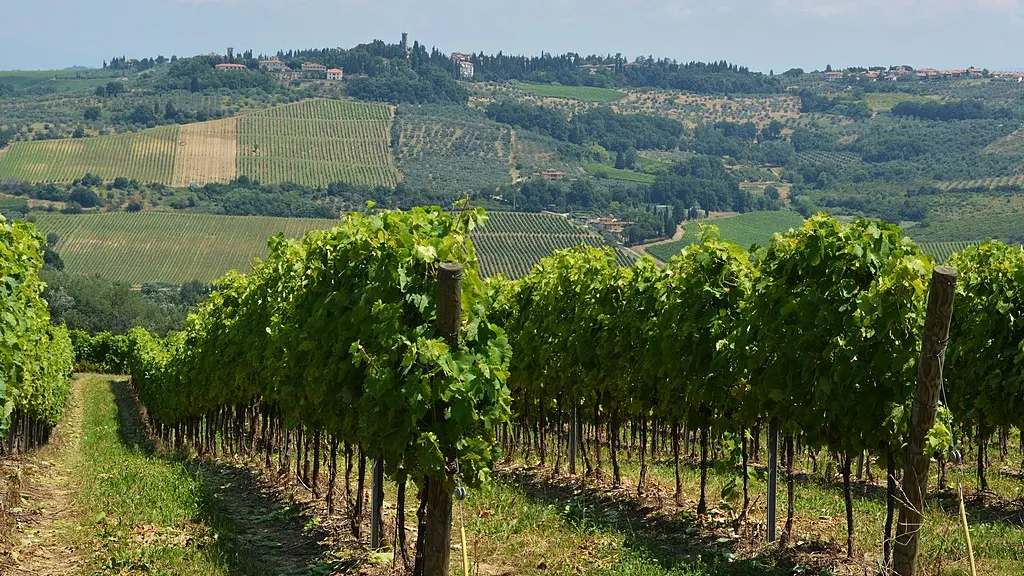
The homeland of the Renaissance, Tuscany plays an important role in Italian identity. Here, some of the boldest and brightest red wines in Italy are produced, which are inextricably linked to the rich history of art and religion in the region. The hills and valleys planted with vineyards have been immortalized by famous artists over the centuries.
Chianti and Chianti Classico
Both Chianti and Chianti Classico are made from the same grape, Sangiovese, but that is where the similarity ends. The main Chianti designation covers a patchwork quilt of vineyards across Tuscany, resulting in a red wine that is typically simple and inexpensive. On the other hand, Chianti Classico can only be produced in a small area between Florence and Siena. These premium wines are much more complex, with concentrated aromas of red fruits, spices, and herbs.
What does basic Chianti taste like? Basic Chianti is a spicy wine with a characteristic bitterness. Fruity aromas of cherry dominate, enhanced by scents of dried herbs and earth.
What does Chianti Classico taste like? You can expect a much more concentrated aroma than from regular Chianti. With notes of dried cherry, plum, cinnamon, and spices – Italy in a glass.
Super Tuscan
Tuscany is also known for its Super Tuscan wines – red wines made from international grape varieties such as Merlot, Cabernet Sauvignon, and Cabernet Franc. Sassicaia and Tignanello were the first two Super Tuscan wines to attract global attention in the 1970s. Since they do not use approved grape varieties, they must be labeled IGT (Indicazione Geografica Tipica).
What does Super Tuscan wine taste like? It depends on the grape used. Overall, these are wonderful, comfortable wines. They often have a rich aroma of black cherry, leather, and cocoa.
Brunello di Montalcino
Brunello di Montalcino is the youngest of the prestigious Italian wines – it was first produced in 1865 – grown in one of the driest regions of the country under the DOCG standard. It undergoes a long two-year aging period and is often aged in small barrels, which impart notes of spice and vanilla to the wine. If you need a cheaper version, look for Rosso di Montalcino – it is made similarly but can be released a year earlier.
What does Brunello di Montalcino taste like? This wine is well-aged and has an interesting flavor profile. You can find notes of strawberry flowers, espresso, and violets in one glass.