






You will get acquainted with the architectural masterpieces of Venice, each of which has an architect and his life behind it, in all its manifestations, influencing the worldview and creativity of the master. This is a very concise and informative route that covers the sestieri (districts in Venetian) of Dorsoduro, Cannaregio, and Castello. You will move away from the bustling central arteries and, as much as possible, see and feel the non-trivial, mysterious Venice.
The architect Baldassare Longhena played a crucial role in modernizing the urban appearance of 17th century Venice.
The main theme of the city walk will be the inspection of the palaces of the “new” aristocratic families. In Venice, a tradition was established: as needed, and sometimes as possible, to “patch” the increasingly meager budget of the Republic in the ancient, proven way – by selling seats in the Great Council, the local parliament. Thus, the wealthy merchants had the opportunity to realize their ambitions, and the state received not only financial inflows but also renewed its life “lymph.” And, of course, according to the new social status, the “nouveaux riches” built family palaces, magnificent, monumental mansions.
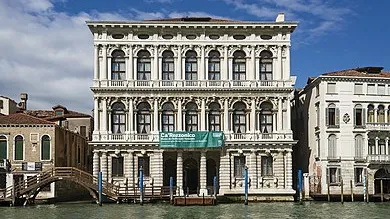
The inspection of the Ca’ Rezzonico palace – the Rezzonico family will satisfy not only your understanding of Venetian Baroque in architecture but, importantly, will give you the opportunity to see and understand the life, customs, and traditions of a wealthy local family in the 17th century.
The Church of the Jesuits, an 18th-century building, was created by a “bouquet” of local architects led by the brilliant Domenico Rossi, who managed to rejuvenate and beautify the old with a new “wig.” A pleasant surprise when visiting this richest church will be the acquaintance with the genius work of Titian “The Martyrdom of Saint Lawrence.”