
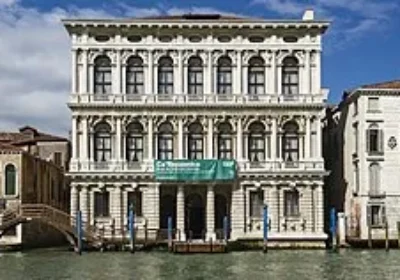
Venice – Treviso – Vicenza – Verona – Garda (Veneto roads)

Loading available options...
  • Duration:8 days 7 nights
  • Tour Type:Auto tour, Cultural and thematic tours, Gastronomic tours, Wine tours
The program and duration can be adapted according to the clients' wishes

Cost upon request

Highlights

  • Venice and San Marco
  • Murano and Burano
  • Museums of Venice
  • Treviso and Prosecco
  • Palladian architecture
  • Verona and Lake Garda

Itinerary

Expand all

Day 1. Arrival, Venice

Day's program:

  • Combined transfer or water taxi to the city
  • First walk through Venice
  • Piazza and Basilica of San Marco
  • Doge's Palace and the Bridge of Sighs
  • Castello District
  • Rialto
  • Optional - gondola ride
  • Dinner at your preference

Description:

Getting to know Venice begins with its main symbols: St. Mark's Square, the basilica, Piazzetta, the Doge's Palace, St. Mark's basin, and the Bridge of Sighs. Along the way — the Castello district, the Clock Tower, details of Venetian Gothic architecture, and a panoramic view of the city from the roof of the 16th-century German courtyard.

In historical context — the journey of Venice from a settlement on the lagoon to one of the strongest maritime republics in Europe, the Fourth Crusade, Venetian colonies, the wealth taken from Byzantium, and the political structure of the Republic of St. Mark. A separate emphasis is placed on the symbol of the winged lion, the origins of the names of the bridges, and the significance of Rialto as the center of medieval world trade.

Optional - gondola ride: at sunset, with champagne and musicians, or in a more relaxed format with a guide.

Day 2. Murano, Burano, and bacaro tour

Day's program:

  • Private wooden boat through the lagoon
  • Murano Island
  • Glass workshop
  • Optional - master class on Murano glass
  • Burano Island
  • Lunch on Murano or Burano
  • View of Torcello from the water
  • Optional - evening bacaro tour
  • Dinner at your preference

Description:

The crossing of the lagoon to Murano takes about forty minutes. Murano resembles a miniature Venice: canals, its own Grand Canal, a tranquil rhythm, and workshops where the glassblowing tradition has been preserved for centuries. Mirrors and glasses were made on the island, which could not be produced in other European countries until the 18th century; masters were forbidden to leave Murano to keep the secrets of the craft.

Upon request - a master class at a family factory: a glass, vase, or another item created together with the master remains as a personal memory of the journey. You can also purchase a finished piece of Murano glass directly at the factory.

Next is Burano, the island of colorful houses and lace. The color of the facade helped fishermen recognize their home from the water, and the tradition of lace-making has become as much a symbol of the island as Murano glass is for Murano. The final part of the water route runs along Torcello, linked to the Byzantine heritage of the lagoon.

Optionally in the evening - a bacaro tour of Venice: Campo Santo Stefano, the Church of Santa Maria Gloriosa dei Frari, local bars, Spritz, wine, and cicchetti. This is one of the most natural formats to see the city not only in its grandeur but also in its everyday life.

Day 3. The Best Museums of Venice

Day's program:

  • Doge's Palace
  • Piazza and St. Mark's Cathedral
  • Peggy Guggenheim Museum
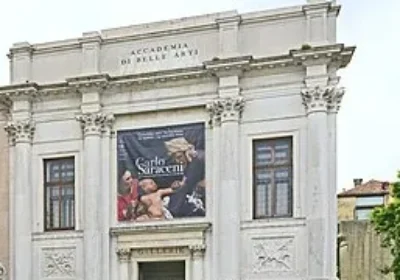
  • Gallerie dell'Accademia
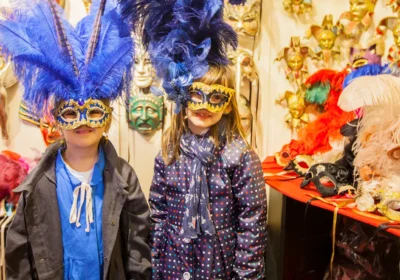
  • Optional - photo session in carnival costumes
  • Optional - master class on Venetian masks
  • Optional - lagoon cruise on a glass boat
  • Dinner at your preference

Description:

The day is dedicated to the main museums and art spaces of Venice. In the Doge's Palace — the history of six centuries: the Great Council, the Senate, secret services, government offices, prison, and the ceremonial residence of the rulers of the Venetian Republic. In the inner courtyard, bronze wells, an 18th-century gondola, and a box for secret denunciations have been preserved; the ceremonial halls lead to the "Golden Staircase" by Sansovino and the paintings of Titian, Tintoretto, Veronese, and other masters of the 16th century.

At St. Mark's — the Clock Tower, Doge's Palace, the columns of St. Mark and St. Theodore, the Campanile, and St. Mark's Cathedral. Inside — golden mosaics, the chapel of the Madonna Nicopeia, a 14th-century altar, and the main Byzantine treasure of Venice.

The Peggy Guggenheim Museum in the Palazzo Venier dei Leoni showcases European and American art from the first half of the 20th century: Picasso, de Chirico, Dalí, Pollock, Kandinsky, Magritte, and other masters. In the Academy Gallery — Titian, Veronese, Bellini, Tintoretto, Giorgione, and the Venetian Renaissance school, with its language of symbols, dramas, satire, and everyday details of the era.

Optionally — a photo session in Venetian carnival costumes or a master class on creating a traditional mask. For a special evening — a lagoon cruise on a modern glass boat with panoramic views of the city; upon request — dinner on board, seafood, local wines, or a tasting with cicchetti.

Day 4. Treviso and the Prosecco Hills

Day's program:

  • Transfer to Treviso
  • Historic center of Treviso
  • Cathedral
  • Fish market and ancient mill
  • Fountain of the Tette
  • Optional - museum block in the Church of St. Catherine
  • Lunch in a traditional tavern
  • Upon request - wine tasting along the way
  • Dinner at your preference

Description:

Treviso is a small town at the confluence of the Sile and Botteniga rivers, surrounded by a fortress wall and a canal about four kilometers long. The historic center has preserved city gates, a 12th-century cathedral, an ancient mill, and an authentic fish market.

One of the characteristic features of the town is the Fountain of the Tette, associated with the golden age of the Venetian Republic: on holidays, white wine flowed from one breast of the fountain, and red from the other. For museum lovers - the Church of St. Catherine with an archaeological section dedicated to this part of Veneto.

Treviso pairs well with the wine part of the route: upon request - a tasting on the way in the Prosecco hills. Lunch - in a traditional tavern with local cuisine.

Day 5. Vicenza and the Architecture of Andrea Palladio

Day's program:

  • Transfer to Vicenza
  • Historical Center
  • Basilica Palladiana
  • Teatro Olimpico
  • Villa La Rotonda
  • Church of the Madonna of Monte Berico
  • Lunch with local dishes and wine
  • Dinner at your preference

Description:

Vicenza is associated with the name of Andrea Palladio — the architect who defined the city's appearance and influenced European architecture of the modern era. The main points of the day are the Basilica Palladiana, Teatro Olimpico, and Villa La Rotonda.

Villa La Rotonda is one of the most quoted works of Palladio. The tour includes the villa, park, symbolism of the frescoes, and a discussion about the phenomenon of villas in the Veneto region: the countryside life of the aristocracy, agriculture, status, and aesthetics of the times of the Venetian Republic.

In the historical center — the main square, Basilica Palladiana, and the Hall of the Council of Four Hundred with its unusual suspended ceiling resembling an inverted ship. From the loggia, there is a view of the city. Teatro Olimpico, the first indoor theater in Europe from 1580, concludes the architectural line of the day. The focus also includes the gastronomic features of Vicenza, the city's jewelry tradition, and the Church of the Madonna Monte Berico.

Day 6. Verona

Day's program:

  • Transfer to Verona
  • Piazza Bra and the Arena
  • Porta Borsari
  • Jewish Ghetto
  • Romeo's House and Juliet's House
  • Scaliger Arches
  • Piazza dei Signori
  • Ponte Pietra
  • Lunch with local dishes and wine
  • Optional — Arena di Verona
  • On request — wine tasting
  • Optional — Vinitaly in April
  • Dinner at your preference

Description:

A walk through Verona begins at Piazza Bra and the Arena — an ancient amphitheater that still remains part of the city's cultural life. Next — the main street, Porta Borsari, the walls of Galienus, hidden churches, and the Jewish ghetto with details that rarely make it into standard routes.

At the Well of the Lovers — one of the city legends, then the house of Romeo, the Scaliger arches, and Piazza dei Signori, the historical center of power. Juliet's house provides an opportunity to talk not only about Shakespeare but also about why the famous balcony is more of a successful cultural myth than a historical fact.

The final part of the walk — Ponte Pietra and a pause for coffee or a glass of wine. On request — wine tasting, in April — a visit to Vinitaly. For opera lovers — a performance or concert at the Arena di Verona. Optionally, you can add dinner and a night in a 14th-century castle with towers, medieval halls, a park, and modern rooms.

Day 7. Lake Garda and Strada della Forra

Day's program:

  • Transfer to Lake Garda
  • Boat trip along the western coast
  • Villas and gardens along the shore
  • Eastern shore of Garda
  • StradadellaForra
  • Viewing platform
  • Limone sul Garda
  • Waterfall
  • Lunch with local dishes and wine
  • Upon request — tasting of wine and olive oil
  • Dinner at your preference

Description:

Lake Garda is one of the largest lakes in Italy and a separate route through Veneto and neighboring territories. The water part takes place on a boat along the western shore: villas from the late 18th to the 20th century, a private island of the Borghese-Cavazza family, a neo-Gothic villa from the 19th century, and gardens by the shore.

Then — the eastern shore, where a complex of buildings belonging to the Venetian family Guarenti di Brenzone has been preserved since the 16th century. At the cape, you can take a break for coffee or a glass of wine; this place is often called little Portofino.

After the water part — a trip along the shore of Garda: cliffs, Mediterranean vegetation, views of the lake, and Strada della Forra, one of the most spectacular roads in Europe, carved through a gorge. Next — a viewpoint, Limone sul Garda with narrow streets and lemon trees, then a waterfall. Upon request — tasting of local wines and olive oil.

Day 8. Conclusion of the Itinerary

Day's program:

  • Breakfast
  • Free time
  • Transfer to the airport

Description:

Free morning before departure. Transfer to the airport.

See more excursions

You might also like...